

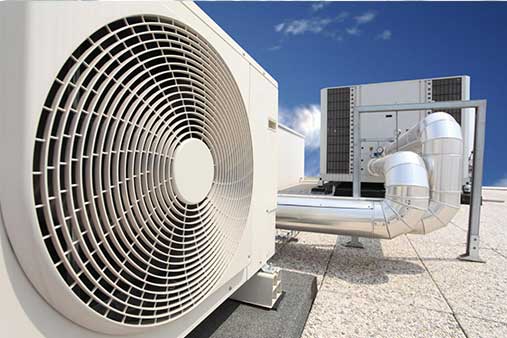
Understanding how much electricity your HVAC system uses can help you make smarter decisions about comfort and energy costs. Central air conditioning is one of the biggest household energy consumers, especially during hot weather, but actual usage depends on system efficiency, home insulation, and how often it runs.
Does Central Air Use A Lot Of Electricity?
It can, but it doesn’t have to.
Central air is one of the biggest electricity users in a home because it runs a compressor and blower that cools the entire house, and in hot weather it can easily become the largest single contributor to your electric bill. In many households, central air electricity usage becomes one of the main drivers of higher summer energy bills, especially during heatwaves.
That said, modern high-efficiency systems in well-insulated homes can be quite reasonable to run. The real issue isn’t that it’s “inefficient by default,” but that it’s often cooling more space than necessary for long periods, which directly affects overall central air electricity usage.
How Much Power Does Central Air Use?
Most residential central AC systems typically draw about 1.5 to 5 kW while running, with smaller or efficient units around ~1.5-2.5 kW and larger or older systems reaching ~3-5+ kW. In some cases, unusually high usage can also be linked to faults or the need for electrical repair, especially if the system is cycling inefficiently or drawing more power than expected.
But what matters more is runtime. On a hot day, a system might run intermittently for 8-16 hours, which is where consumption adds up. This usually translates into roughly ~8-15 kWh on a light use day and ~20-50+ kWh during heatwaves.
In practice, actual usage depends heavily on runtime and temperature, which is why central air electricity usage varies so widely between homes and climates.
Central Air Electricity Usage: What Affects It Most?
A few factors dominate your energy bill more than anything else.
The biggest factor is the temperature difference between outdoors and indoors. The hotter it is outside, the harder your system works, since air conditioners don’t “create cold”, they remove heat, and that becomes exponentially harder in extreme heat. This directly increases overall central air electricity usage.
Another major influence is how well the home is insulated and sealed. Poor insulation and air leaks, including leaky or uninsulated ducts and gaps in windows, are like leaving a fridge door slightly open all day, letting cooled air escape before it can do its job. If central air electricity usage suddenly spikes without a clear change in weather or settings, it may indicate an underlying electrical issue that should be checked by an electrician or HVAC technician.
Thermostat settings also matter, since each degree lower can increase energy use by roughly 3-10% depending on conditions. Finally, system efficiency (SEER rating) plays a key role in overall central air electricity usage, where higher SEER means less electricity for the same amount of cooling.
Cost To Run Central Air Per Hour: What Does It Really Cost?
This depends heavily on your electricity price and system size, but a realistic range is: small efficient systems typically cost about $0.20-$0.50 per hour, average home systems around $0.40-$0.90 per hour, and older or large systems in peak heat about $0.80-$1.50+ per hour. In Europe, where electricity rates are often higher than in the U.S., the upper end can be more common.
On average, cost to run central air per hour varies mainly with electricity price and compressor runtime, and this is why it feels expensive during long summer days. For many households, the perception of high bills comes more from hours of operation than from the actual hourly rate of cost to run central air per hour.
The key insight is that central air feels expensive not because of the hourly cost, but because it runs for many hours per day in summer.
Central Air Conditioner Energy Consumption Vs Other Cooling Systems
Central air is best for whole-home comfort, but it can have higher total energy use if the whole house isn’t occupied. Central air conditioner energy consumption is often lower than running multiple window units for an entire home, yet higher than cooling a single room.
Compared to other systems, central air conditioner energy consumption is often less efficient than ductless mini-split systems in partial-home cooling scenarios, while usually being more efficient than portable air conditioners due to the latter’s heat exhaust losses.
Window units are efficient for single rooms but become inefficient when multiple units are needed. Portable ACs tend to be the least efficient overall, while ductless mini-splits are often the efficiency winner because they cool only the spaces you actually use.
In short: central air wins on convenience, while mini-splits often win on efficiency.
Do Window Units Use More Electricity Than Central Air?
It depends on usage pattern.
For a single room, a window AC usually uses less electricity than central air, while for multiple rooms central air is often more efficient overall. A window unit might use about 0.5-1.5 kW per unit, so two or three units running at once can quickly match or exceed central air consumption.
In practice, the real difference is control rather than just raw efficiency. For whole-home cooling, several window units can end up using as much or more electricity than a central system.
Central Air Electricity Usage: How To Reduce It
This is where small changes make a big difference.
Raise the thermostat slightly to around 75-79°F when possible, and use ceiling fans to reduce perceived temperature and “extend” cooling comfort. Comfort isn’t just temperature, it’s airflow, humidity, and consistency.
Close blinds or curtains during peak sun hours to block direct sunlight, and seal obvious air leaks around windows, doors, and attic access. Keep air filters clean or replace them regularly, and avoid cooling unused rooms where possible if your system allows zoning.
It also helps to run the AC in steady cycles and maintain consistent temperatures instead of frequent large adjustments or extreme cooling swings. If the system is shutting off unexpectedly or a circuit breaker is tripping, it may indicate an overload or an electrical issue that needs attention.
Central Air Conditioner Energy Consumption: Is An Upgrade Worth It?
Often yes, but only under the right conditions.
A modern high-efficiency system (high SEER rating, variable-speed compressor) can reduce central air conditioner energy consumption by about 20-50% compared to older units, sometimes even more, especially when replacing older single-stage systems.
Upgrading is typically worth it if the system is 10-15+ years old, your summer electricity bills are high, or you plan to stay in the home long enough to recoup the cost.
However, the benefit is smaller if your current system is already fairly efficient, your cooling demand is low, or if the home has major insulation issues that haven’t been addressed yet.
Overall, reducing central air conditioner energy consumption is usually most effective when combined with insulation and airflow improvements rather than equipment upgrades alone.